The Grayscale Phone Trick: Does It Really Work?
Short answer
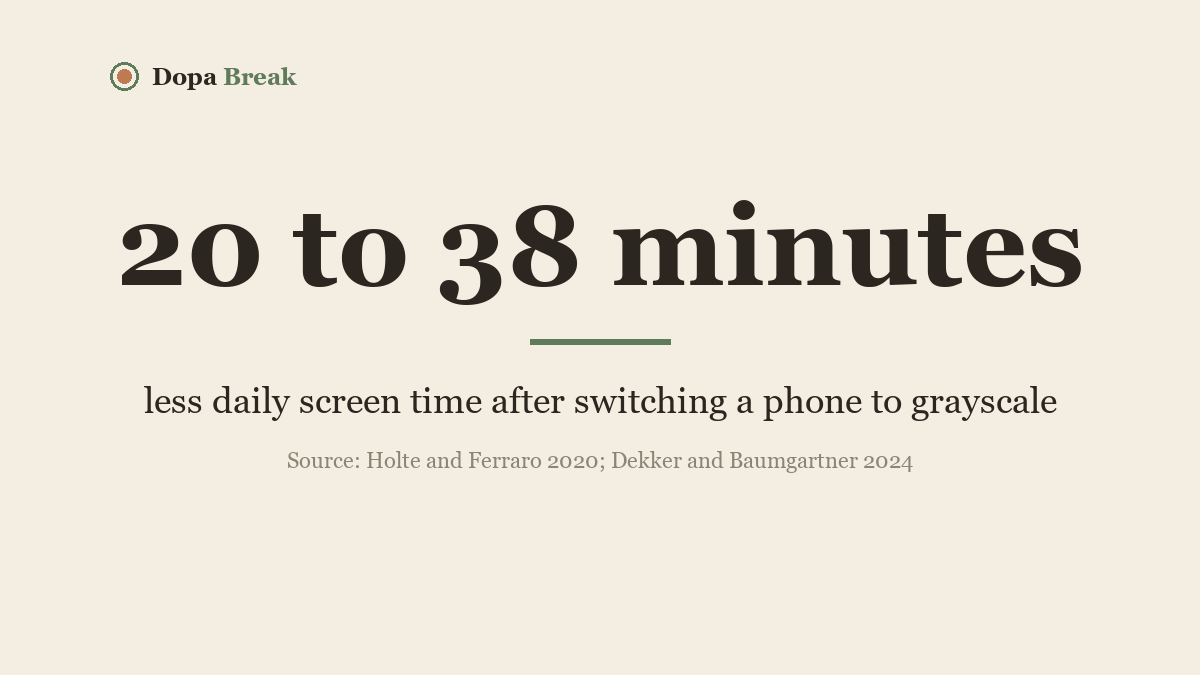
The grayscale phone trick genuinely works: controlled studies using objectively logged screen time, not self-reports, found switching a phone display to grayscale cut daily use by roughly 20 to 38 minutes on average. Color is a big part of what makes icons and feeds grabby, so removing it makes the phone quietly boring with almost no ongoing effort after a two-minute setup, though the effect varies from person to person.
- Holte and Ferraro (2020) found grayscale cut objectively logged screen time by roughly 38 minutes a day in university students.
- A separate 2024 study by Dekker and Baumgartner found a smaller but real reduction, around 20 minutes a day, plus lower perceived stress.
- Saturated color acts as a salience cue that pulls the eye, so removing it is a big part of why the phone gets quieter.
- Grayscale works best paired with notification batching and a decluttered home screen rather than used alone.
Yes, grayscale genuinely helps. Trials that measured actual logged screen time, not self-reports, found switching a phone to grayscale reduced daily use by roughly 20 to 38 minutes on average. Color is a big part of what makes icons and feeds grabby; removing it makes the phone quietly boring, with zero effort after setup.
What does the research show?
Holte and Ferraro (2020) had university students switch to grayscale and saw objectively logged screen time drop by around 38 minutes a day, alongside lower reported problematic use. A 2024 study by Dekker and Baumgartner found a smaller but still real reduction, around 20 minutes a day, along with lower perceived stress and a greater sense of control, though no measurable change in productivity or sleep. Effects vary by person, and grayscale is a lever rather than a cure, but for a free 2-minute change the payoff is unusually well documented.
Why does removing color work?
App designers use saturated color deliberately: red badges, bright thumbnails, rainbow feeds all act as salience cues that pull the eye and promise reward. In grayscale those cues flatten into gray mush, so the phone stops shouting at you. The honest caveat: the exact mechanism is still being studied, but the behavioral result shows up in the logs.
How do I turn on grayscale?
- iPhone: Settings, Accessibility, Display and Text Size, Color Filters, turn on Grayscale. Then add Color Filters to the Accessibility Shortcut so a triple-click of the side button toggles it.
- Android: Settings, Digital Wellbeing, Bedtime mode turns the screen gray on schedule. Many phones also offer a Grayscale quick tile in the notification shade.
- Keep a toggle. Flip color back on for photos and maps, then flip it off again. Grayscale you can live with beats grayscale you abandon.
What are the limits?
Grayscale is not magic: you can adapt to it, and you can always toggle it off. It works best stacked with notification batching and a cleaned-up home screen, which together attack the phone's pull from several angles at once. That stack is exactly what Dopa Break's Phone Setup Protocol walks you through.
Frequently asked questions
Does grayscale mode actually reduce screen time?
Yes. Controlled studies using objective screen-time logs, including Holte and Ferraro (2020) and Dekker and Baumgartner (2024), found grayscale cut daily phone use by roughly 20 to 38 minutes on average.
How do I make my iPhone grayscale?
Settings, Accessibility, Display and Text Size, Color Filters, then turn on Grayscale. Add Color Filters to the Accessibility Shortcut to toggle it with a triple-click of the side button.
Will grayscale stop working once I get used to it?
The effect can fade for some people, and you can always toggle it off. It works best combined with notification batching and home-screen cleanup rather than as a lone fix.
Sources
- Holte, A.J. & Ferraro, F.R. (2020), "True Colors: Grayscale Setting Reduces Screen Time in College Students", The Social Science Journal Eight-to-ten-day trial: grayscale cut objectively logged screen time by roughly 38 minutes a day.
- Dekker, C.A. & Baumgartner, S.E. (2024), "Is Life Brighter When Your Phone Is Not? The Efficacy of a Grayscale Smartphone Intervention Addressing Digital Well-Being", Mobile Media & Communication Found roughly 20 fewer minutes of daily screen time and lower perceived stress, with no measurable effect on productivity or sleep.